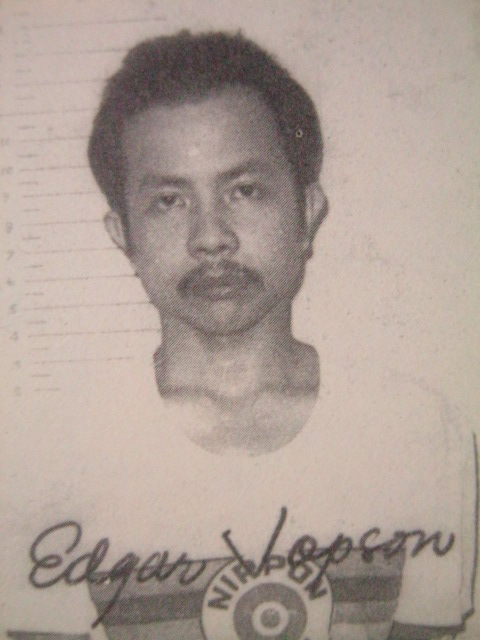
In June 1976, at
age 21, I became the “youth coordinator” of the National
Secretariat of Social Action (NASSA). NASSA was the social action arm of the Catholic
Bishops Conference of the Philippines (CBCP). In this capacity, NASSA
coordinated the activities of the various Social Action Centers (SAC) which
operated under the 70+ Roman Catholic dioceses in the country.
NASSA Youth Consultation
There were three
regional offices under NASSA: Luzon Secretariat of Social Action (LUSSA),
Visayas Secretariat of Social Action (VISSA), and Mindanao-Sulu Secretariat of
Social Action (MISSSA).
NASSA Youth Consultation
About two months before I got the job, I attended a “youth consultation” sponsored by NASSA. It was held at the NASSA headquarters along F.B. Harrison street in Manila, just opposite the Daughters of St. Paul compound. The purpose of the consultation was to get an idea of the youth situation, activities and organizations wise, almost four years after the declaration of martial law. Fr. Luis “Louie” Hechanova C.Ss.R, executive secretary of NASSA, presided.
Youth and
students’ organizations of all persuasions were the hardest hit by martial law,
because the young were the most vocal against the Marcos government. NASSA, as
a part of its calling, was very interested in reviving youth activities, so it
decided to call the meeting.
I applied for
the position, and was chosen from among three applicants. I was interviewed by
Fr. Louie Hechanova and Bishop Julio Labayen, who was then NASSA’s chairman. I
was recommended to Fr. Louie Hechanova by Tess Lioanag, who was from JPD. I
signed a one-year contract starting June 1, 1976, with a starting salary of PhP
500.
In attendance
were representatives of student organizations from, as far as I remember, De La
Salle University (DLSU), Ateneo de Manila University (AdMU), University of
Santo Tomas (UST), St. Scholastica’s College (SSC) and University of the
Philippines (UP). I attended as a representative of the UP Student Committee
for Student Rights and Welfare (SCSRW).
Also attending
were members of Young Christian Workers (YCW), Student Catholic Action (SCA),
and UP Student Catholic Action (UPSCA). Priests and nuns who were active in
student organizing were also there. I remember Fr. Efren Dato from the Diocesan
Youth Formation Center (DYFC) of Malolos, Fr. Robert Espenilla from Archdiocese
of Manila SCA, Fr. Antonio Unson, chaplain of UPSCA, Fr. Tadgh Kennelly SSC and
Fr. Pat Raleigh SSC, both from Archdiocese of Manila SCA, Fr. Jose Blanco SJ,
who was deeply involved in student organizing in Indonesia, and Sr. Mary John
Mananzan OSB, Dean of SSC. Sr. Mary John brought along her officer for student
affairs, Sophia Lizares.
NASSA Youth Desk
After an extensive sharing of experiences, insights, and opinions, the consultation unsurprisingly learned that youth activism had been severely impaired by martial law. Having acknowledged this fact, the consultation made a commitment to revive the diverse youth and student movements represented in the meeting. It also adopted the vision of the Filipino youth reassuming its influential role in national affairs before the martial law.
NASSA Youth Desk
After an extensive sharing of experiences, insights, and opinions, the consultation unsurprisingly learned that youth activism had been severely impaired by martial law. Having acknowledged this fact, the consultation made a commitment to revive the diverse youth and student movements represented in the meeting. It also adopted the vision of the Filipino youth reassuming its influential role in national affairs before the martial law.
As a first step,
NASSA, through Fr. Hechanova, committed to setting up a youth desk, to be
staffed by a youth coordinator, and to be based in NASSA’s Justice and Peace
Department (JPD). Fr. Louie stressed that the job of the NASSA youth
coordinator was two-fold: to get an idea of the youth situation in the
dioceses, and to act as NASSA liaison officer in all matters concerning
diocesan youth organizations.
Social Action
“Social action”
was the all-inclusive term used by the Catholic Church to mean its numerous
activities to uplift the condition of the poor and needy in the light of the
gospel, and the papal social encyclicals.
The pertinent papal social encyclicals in the Seventies were: Rerum Novarum, Quadragesimo Anno, Mater et Magistra, Pacem in Terris, Gaudium et Spes, Populorum Progressio, Octogesima Adveniens, and Justice in the World.
The Church social encyclicals started coming out late in the 19th century when it confronted the Industrial Revolution and its new system of production, social and political relations, and property ownership. The encyclicals championed the dignity of labor, the right of workers to form unions, and denounced the control by a few of society’s wealth.
Starting with Pope Leo XIII, the popes have used encyclicals to tackle what they see as economic and social injustices affecting humanity. The Church has justified this action by stating: “The Church makes a moral judgment about economic and social matters when the fundamental rights of the person or the salvation of souls requires it." (Catechism of the Catholic Church 2420)
 |
| From 1976 to 1977, I worked for the CBCP as Youth Coordinator of NASSA and as a consultant for the CBCP Youth Committee under Bishops Jose Sorra, Felix Perez, and Fernando Capalla. I am particularly proud of the CBCP Youth Survey of 1977, which was the first comprehensive survey of young people under martial law. Thanks to Prof. Archimedes Carlos of the UP Department of Sociology |
Social Action Centers
A Catholic
diocese was roughly equivalent to a Philippine province, with the big ones
being called archdioceses. A diocese was headed by a bishop, while an archdiocese
was led by an archbishop. An SAC, in turn, was managed by a Social Action
Director (SAD), often a young priest in his late twenties or early thirties.
The activities of a typical SAC were the following: Basic Christian Communities, which was a kind of community organizing effort, Justice and Peace, which looked after human rights cases and related matters, Relief and Rehabilitation, which helped the victims of calamities, Family Life, which fostered stable marriages and child education, Alay Kapwa, which was a program to assist the poor, and Youth Formation, which organized both students and out-of-school-youth towards socially relevant activities.
The Tasks of NASSA-JPD
NASSA-JPD at that time was in charge of defending the rights of political detainees by representing them in the courts, and through negotiations or liaison with the military. Common concerns were arbitrary arrests, extrajudicial executions (salvaging), and torture. It had a team of lawyers for this purpose. I remember Aquilino “Nene” Pimentel, and a certain Atty. Malonzo.
The activities of a typical SAC were the following: Basic Christian Communities, which was a kind of community organizing effort, Justice and Peace, which looked after human rights cases and related matters, Relief and Rehabilitation, which helped the victims of calamities, Family Life, which fostered stable marriages and child education, Alay Kapwa, which was a program to assist the poor, and Youth Formation, which organized both students and out-of-school-youth towards socially relevant activities.
The Tasks of NASSA-JPD
NASSA-JPD at that time was in charge of defending the rights of political detainees by representing them in the courts, and through negotiations or liaison with the military. Common concerns were arbitrary arrests, extrajudicial executions (salvaging), and torture. It had a team of lawyers for this purpose. I remember Aquilino “Nene” Pimentel, and a certain Atty. Malonzo.
JPD also had a
trade union coordinator in the person of Fr. Ted Añana,
and a community organization expert by the name of Oscar “Oca” Francisco. The
head of JPD at that time was the distinguished Jesuit, Fr. Pacifico Ortiz.
Among Fr. Ortiz’
distinctions were: being spiritual adviser to President Manuel L. Quezon, and
serving as delegate to the 1971 Constitutional Convention. As head of JPD, Fr. Ortiz also co-chaired the
Church-Military Liaison Committee (CMLC), which discussed cases of political
detainees. Our efficient clerk-typist was Edith Torres.
I Make Friends
JPD also had a
staffer, Jess Agustin, who was in charge of conducting seminars and doing
research into “liberation theology.” However, Jess did not hold office at the
NASSA headquarters. He was based at the Loyola House of Studies of the Ateneo
de Manila University in Quezon City. NASSA assigned him there at the request of
theologian Fr. Carlos Abesamis S.J., who was assisting NASSA in this field.
Jess Agustin and
I became the best of friends. I often visited him in Loyola Heights, because I
asked him to help in giving social awareness seminars to diocesan youth
organizations. Jess was particularly adept at conducting “structural analysis”
seminars. It was the safe way of
introducing the youth to socially relevant and nationalist activism.
Other NASSA
staffers with whom I developed lasting friendships were: Delle Tiongson, Melba
Vidal, Tonette Garcia and Fr. Demetrio Imperial, all skilled analysts from the
projects department, and Mano Gonzales, editor of the NASSA publication NASSA
News.
One of the first
things that I did as NASSA youth coordinator was attend a regional youth
consultation, organized by VISSA. The
purpose of the meeting was, of course, to get a more detailed youth situation
in the regional and provincial levels. It was chaired by VISSA executive
secretary Fr. Frank Gonzales. It was held in Dumaguete City.
Regional Youth Consultations
During my one-year
NASSA stint, LUSSA did not hold a youth consultation of its own. I now surmise
that it did not consider youth affairs as a priority area. MISSSA, for its
part, held a youth consultation, but I was not able to attend. They did,
however, send me a detailed report, written by the MISSSA executive director
Fr. Orlando Carvajal.
I also tried to
communicate directly with the different social action directors (SAD), to get additional
inputs on the youth situation in the parishes. This did not prove to be very
successful, as only a few answered my letters. Fr. Louie advised me that I was
sort of breaking protocol by writing to the SAD’s shotgun style. I was putting
them off, said he, which included the bishops, whom I copy-furnished with my
letters.
I was horrified
at committing such a lapse in decorum. I realized the church network was a much
different world from UP, where I cut my teeth in activism. At any rate, Fr.
Louie suggested that I make friends with selected SADs and youth leaders, and
make diocesan visits. This was the proper, though tougher way, he told me.
For the above
purpose, I made it a point to attend various LUSSA, VISSA, and MISSSA meetings where
I could meet and talk with the SADs. After I had befriended some whom I thought
were of the right political leanings, I told them I would visit their centers.
All of them enthusiastically agreed to host me. They even requested me to give
social awareness seminars to their youth, which I did so zealously. I even
brought along a team from UP to assist me.
Social Awareness Seminars and Fact-Finding Meetings
All in all, during my term in NASSA, I must have conducted about five such seminars, involving an average of about 30 young
people each, with many of them repeating the seminars several times over. We called these seminars "echo" seminars. I felt that after being cooked up in Diliman for 5 years, I was seeing the "real" world. At any rate, it was great to
travel all over the country, all expenses paid.
In the youth
centers, the fact-finding discussions with the social action directors and
youth coordinators were mainly about: How many youth organizations are there in
the parish? What is the orientation or nature of these organizations? What are
the activities of these organizations? What is the “level of awareness” of the
youth in the area, in such things as: concern for the poor, participation in politics,
martial law, the social role of the Church, and youth activities in general?
Lastly, where there cases of human rights violations committed by the military
against youth organizers?

A Typical NASSA Staff Meeting
My Obsession with the Youth and Students Movement
My obsession with the youth and students movement was a legacy of my days as a student organizer in the University of the Philippines, from 1974 to mid-1976. In late 1975, things started to get tough in UP, security wise. The high point came early in January 1976, when the Philippine military, in one vicious campaign, rounded up UP student leaders, and other anti-dictatorship personalities. I was lucky enough to escape the raids.
My obsession with the youth and students movement was a legacy of my days as a student organizer in the University of the Philippines, from 1974 to mid-1976. In late 1975, things started to get tough in UP, security wise. The high point came early in January 1976, when the Philippine military, in one vicious campaign, rounded up UP student leaders, and other anti-dictatorship personalities. I was lucky enough to escape the raids.
In May, 1976, I was
informed that agents were hot on my trail, ready to arrest me when the
opportunity came. Starting that time, to avoid capture, I decided to be less
publicly seen, like not frequenting anymore my haunts in UP. I even learned
that I already had a “dossier” more than two inches thick in some government
intelligence unit.
Institutional Support from NASSA
However, my preoccupation,
however messianic, of reinstating the once exalted student movement was as
strong as ever. This was my mindset when I decided to join NASSA as youth
coordinator. I needed a strong institutional defender to continue my passion of
youth and student organizing.
NASSA seemed to
fit the bill. It had the formidable institutional backing of the CBCP, which
made its employees less vulnerable to arrest.
Secondly, the NASSA staffers and leaders I met during the youth
consultation were very friendly and accommodating. Finally, I was inspired by
NASSA’s principles, which hewed to the political program I was espousing.
NASSA, in those
days, was in the forefront of the anti-martial law struggle in the Philippines.
It was doing this after the pre-martial law opposition, politicians and student
activists all, had been locked up by President Marcos and were largely inutile. The center of gravity of the opposition to Marcos had shifted from the student sector to the religious sector. In this endeavor, NASSA found company in the Association of Major Religious
Superiors in the Philippines (AMRSP). I would say AMRSP was more militant and
assertive.
NASSA struggled against martial law albeit subtly and judiciously, through carefully worded statements, dialogues with the military, legal assistance to political detainees, and low profile support for anti-martial law projects. However, NASSA could be militant once in a while. It was a supporter of the historic La Tondeña strike in December 1975. In fact, the first time I saw Fr. Louie Hechanova was when he pledged support for the strike with a fiery speech at a Bukluran ng Manggagawang Pilipino (BMP) rally at the Vinzons Hall roof garden in UP Diliman.
NASSA struggled against martial law albeit subtly and judiciously, through carefully worded statements, dialogues with the military, legal assistance to political detainees, and low profile support for anti-martial law projects. However, NASSA could be militant once in a while. It was a supporter of the historic La Tondeña strike in December 1975. In fact, the first time I saw Fr. Louie Hechanova was when he pledged support for the strike with a fiery speech at a Bukluran ng Manggagawang Pilipino (BMP) rally at the Vinzons Hall roof garden in UP Diliman.
Bishop Julio Labayen and Fr. Luis Hechanova
NASSA was in a
position to do so, because, being an appendage of the Catholic Church, the
Marcos government hesitated to arrest its members, lest it invite international
condemnation.
Moreover, the
leadership of NASSA was known for their integrity and stature in the religious
community. Its executive director was
Fr. Louie Hechanova, 35 years old, an outstanding Redemptorist, an alumnus of
the Asian Institute of Management, and a member of a prominent Ilonggo clan
which controlled the shipping concern Negros Navigation.
Two of Fr.
Louie’s brothers were even more famous than him: one was the whiz kid Rufino “Feny”
Hechanova, who was the young finance secretary to President Diosdado
Macapagal, and the other was Rafael "Paeng" Hechanova, who was a famed Ateneo basketball
player who played for the YCO Painters and the Philippine team to the
1952 Helsinki Olympics.
The other NASSA
pillar was its chairman, the Rev. Julio Xavier Labayen, the esteemed Carmelite bishop
from the Prelature of Infanta. Bishop Labayen started it all: he was the first social action director
in the Philippines ever. He was among the first to preach the importance of the
church’s “preferential option for the poor.” This dictum was first enunciated
in 1891 by Pope Leo XIII in his famous encyclical “Rerum Novarum” and
elaborated in subsequent papal encyclicals.
The CBCP National Youth Survey Project
The highlight of
my job at NASSA was the CBCP National Youth Survey project. It happened that
towards the end of my term, around April, 1977, the CBCP Episcopal Commission
on Youth Apostolate (Commission on Youth) needed a detailed knowledge of the
situation of the youth (ages 15-25) in the Philippines. It also happened that
NASSA was the CBCP agency that had the most advanced work in youth affairs,
namely, its youth desk that I was occupying.
The CBCP
Commission on Youth was composed of three bishops --- Bishop Jose C. Sorra of
the Diocese of Legazpi, who was the chairman, Bishop Felix P. Perez of the Diocese of Imus, and Bishop Fernando R. Capalla of the Archdiocese of Davao. The three bishops wanted to know in detail the
Philippine youth condition, in time for the 1978 Synod of Bishops in Rome which they
were attending.
The CBCP
Commission on Youth communicated to the various CBCP agencies involved in youth
affairs, and one of these was, of course, NASSA. Fr. Louie Hechanova must have
informed the commission that NASSA already had conducted a youth consultation
the year before, and had a fully functional youth desk with a full-time youth
coordinator.
Which would
probably explain why Fr. Louie Hechanova surprised me by instructing me to
attend a meeting of the CBCP Youth Commission. I attended the meeting, and
there I met the three bishops, and the CBCP Secretary, Fr. Teodoro Buhain of
the Archdiocese of Manila. It was held at the CBCP headquarters in Intramuros.
Since I felt awkward in the company of CBCP top brass, I requested Sr. Mary
John Mananzan, who was a friend, to accompany me.
The Bishops Ask Me to Conduct a Survey
At the end of
the meeting, which lasted about two hours, the bishops asked me if I could
contact someone in UP whom they could commission to conduct a nationwide survey
into the Philippine youth situation. I had earlier told them that I graduated
from UP, and was a former UP student activist. They promised
that UP could use the CBCP national network of dioceses, which was intact and
undisturbed by martial law. They also said that money and logistics were not
problems. I jumped at this precious opportunity.
Aside from
getting a scientifically determined situation of the Philippine youth, here was
a chance to expand my network of contacts outside that of NASSA’s system. The
thousands of survey respondents would automatically be my contacts. I had imagined that there were scores more of
youth organizations that existed apart from those reached by NASSA. This meant
more youth organizations that can be activated, or made to undergo social
awareness seminars.
To undertake the
nationwide survey, I contacted my friend, Prof. Archimedes “Archie” Carlos of
the UP Diliman Department of Sociology. He gladly accepted the project. He was
to be assisted by another UP sociology faculty, Prof. Dan Lapid. I was to be a
consultant.
UP Sociology Department
Profs. Archie
Carlos and Dan Lapid prepared a research proposal, with the budget at PhP
350,000. When we presented the proposal to the bishops and Fr. Buhain, they
approved it right away. There were to be about two thousand respondents, and nine survey areas. We
then asked for a list of dioceses and their respective bishops. These would be
used in making the sampling design, we told the bishops.
The project
hired about thirty UP undergraduate students as research assistants. About the same number were hired as coders. We needed coders because we were using an IBM 360. Our chief coder was Naida Ganchero.
Not accidentally, these students were all activists. In the initial meetings, I explained to them the two aims of the youth survey: that of knowing the Philippine youth situation and gathering contacts. Of course, I added, they were also free to discuss current events with the respondents: we would not let this rare chance slip by. Suffice it to say that all of them unreservedly agreed to participate.
Not accidentally, these students were all activists. In the initial meetings, I explained to them the two aims of the youth survey: that of knowing the Philippine youth situation and gathering contacts. Of course, I added, they were also free to discuss current events with the respondents: we would not let this rare chance slip by. Suffice it to say that all of them unreservedly agreed to participate.
We divided the
group into three teams: Luzon Team, Visayas Team, and Mindanao Team. The teams
were further divided into three sub teams each. In June 1977, the teams fanned
out to the nine survey areas, for a two month data gathering. I did my data gathering in Catbalogan, Samar, with friends Romulo Quimbo Jr. and Christine Manansala. I also joined the data gathering in Malolos, Bulacan, Laoag, Ilocos Norte, and Misamis Oriental.
In the middle of the data gathering period, around August 1977, the whole research group gathered for two days at Patria de Cebu in Cebu City. We did so to compare notes, consolidate the data, and share experiences. At the end of the data gathering period, the group met again, in a beach resort in Nasugbu, Batangas.
In the middle of the data gathering period, around August 1977, the whole research group gathered for two days at Patria de Cebu in Cebu City. We did so to compare notes, consolidate the data, and share experiences. At the end of the data gathering period, the group met again, in a beach resort in Nasugbu, Batangas.
We Present the Survey Report to the Bishops
We wrote the
survey report for about two months, in August and September 1977. Each team was
represented in the writing group. I remember we burned the midnight oil at the
residence of one of the researchers, Claire Miravite, in Philam Life Homes
Quezon City. We were all very excited that we were writing the first comprehensive assessment of the youth situation in the Philippines since the declaration of martial law.
The main findings of the survey were: a) five years after the declaration of martial law, student organizations and publications at the college or university level were largely non-existent or inactive, except in the Metro-Manila area; b) parish based youth groups were the most numerous form of youth organization; and c) the government’s censorship of mass media and student newspapers had lowered the social awareness of tertiary students and out-of-school youth. (OSY)
We presented the survey report to the bishops in October or November 1977, with Fr. Leonardo Z. Legaspi from University of Santo Tomas (UST) as critique. I remember Fr. Legaspi aggressively scrutinizing the report and giving Archie, Dan, and me a hard time.
The main findings of the survey were: a) five years after the declaration of martial law, student organizations and publications at the college or university level were largely non-existent or inactive, except in the Metro-Manila area; b) parish based youth groups were the most numerous form of youth organization; and c) the government’s censorship of mass media and student newspapers had lowered the social awareness of tertiary students and out-of-school youth. (OSY)
We presented the survey report to the bishops in October or November 1977, with Fr. Leonardo Z. Legaspi from University of Santo Tomas (UST) as critique. I remember Fr. Legaspi aggressively scrutinizing the report and giving Archie, Dan, and me a hard time.
As for the
organizations that we contacted in the survey, I would be coming back to them
in the succeeding two years, but in a different capacity. But that’s another
story.
All in all, my
experience at NASSA as youth coordinator was one of the happiest and rewarding
periods of my youth. Happy, because I made so many friends. The reward? It
comes from the thought that, through the young Filipinos that I reached, I
helped spread the message of freedom around my country. Marcos with his martial law tried to stifle
this idea, but failed.
 |
On December 7, 2014, NASSA had its most successful reunion ever at the Browers' residence in Malolos. It was organized by Melba Vidal, Delle Tiongson Browers, and Mano Gonzales, a group fondly called "The Junta" by the NASSAlites. Borrowing from the Junta's emailed description, those in the picture are: First row on the grass: Alice Pango Ang (N- Finance, worked with Delle at MASAI, now with OIKO Credit), Pangging Santos (M-Projects, now a practising advocate and cook of organic food and active in community mental health services with husband Sonny, they are parents to Anto, long-time soccer coach in UP ), Marilen Abesamis (N-writer-editor, Nassa News, MSPC, body talk practitioner, sister of Fr. Abe, we're waiting for the book), Ceres Doyo (journalist,Philippines Daily Inquirer, NASSA extension extraordinaire) Second row: Rafael (Doy) Medes (N- Maintenance, famous for his laing, engaged in environmental-friendly actions in Molino, Cavite and husband to Fredes who could not attend), Delle (N Projects, MASAI, retired from OIKO Credit, better half of Jan, perfect host whose Malolos digs have become the reunion favorite), Nilda Almaden (better half of Caloy Almaden-N, she's back to her first love, teaching), Betty Panganiban (Lito's one, true love, original NASSA Adm staff, still looking good), Sister Lucille Perpinan, SPC (N- name one who does not know her from her days at the Rural Missionaries, OHD, St. Paul Hospitals everywhere), Remmy Rikken (first among social action workers in early 70's, SAC in Tagum, Davao del Norte with Maryknoll Fr. Tom Marti, PETA, FILIPINA., formerly Executive Director and currently indefatigable Chairperson of the Presidential Philippine Commission on Women), Sister Luming Torres, ICM (N- Relief and Rehabilitation, originally recruited by Louie H to prepare us for disasters, later part of N's Finance Team and still takes charge of finances for the ICM unit she is part of. At 89, still visits our dear friend, Maring Feria, every Tuesday) Third row: Sonny Redor (N-Finance, partner-owner of prestigious accounting firm, recruited on short notice as chief collector and accountant for contributions to pay our caterer's fee, faithful reunion attendee), Lito Panganiban (original N staff, celebrating 43 years of wedded bliss to Betty Panganiban, together they operate Paraiso Beach Resort in Sariaya, Quezon rumored location of the next reunion), Omi Royandoyan (L-projects, Executive Director, formerly grim and determined, now determined and still devoted to farmers), Roberto, "Beto" Reyes (N-Youth J & P, had the most unforgettable initial flight experience to Cebu with improper instructions from his elders, you can find out his interests and activities on the internet), Mano Gonzales (N- RPD-NASSA News, AIM, OIKO Credit, now free lancer), Chato Sto. Domingo (original L with Sr. Victricia, Edna and Ching, rushed to reunion after attending eldest daughter's graduation from AIM), Fr,. Nonong Pili, L-Executive Secretary, later and still with SPI, Rector of St. Joseph Formation House, Prelature of Infanta), Rolly Libang (better half of Gert, L consultant), Gert Libang (N-Projects, later L, now with Gabriela), Lu Gargarita (L- adm., timed arrival from abroad to attend reunion), Vivian (L- was it Nolasco blame hearing failure to remember her role in LUSSA but glad she's back in the fold), Edna "Tolindoy" Francisco (L original staff, otherwise known as Oca's better half, still active in Optima and field trip partner with Ching), Jing Gimena (N-RPD-Nassa News, and when she's in RP, field trip partner of Mano ) Angge Dominguez Lahoz (Episcopal Commission on Tribal Filipinos, friend of N after hours, has a Montessori school, promised children (hindi siguro puede dahil overage) and grandchildren of reunionists can study free), Melba (N-retired, currently busy with house repairs), Tonette Garcia (original N staff, she was perhaps 18 years old, turned out to be one of the best union organizers among nurses in the San Francisco Bay Area, recently retired) Last row (back): Sonny Gonzales (M- projects, also known as the better half of Pangging Santos, organic food advocate, active in promoting community-based mental health services), Ted Borrero (L-Projects and JP ba?, currently works in Phil office (saan na nga?) while Pancho works in international circles), Berry Barraquias (N loyal lawyer and staunch supporter of carless NASSA staff bound for reunions, father of Nenette's co-worker at OPAPP), Caloy Almaden (N-maintenance team and better half of Nilda, loyal attendee at Nassa reunions), Jess Agustin (N- J & P with Fr. Abe, visited Harrison office but mainly holed up at Loyola House of Studies, the much older versions of former NASSA girls commented, he's better looking than in NASSA days, first timer at a NASSA reunion, has been with CCODP (Canadian Catholic Organization for Development and Peace) for many, many years, promised to gift everyone at the reunion with sharp-looking reunion T-shirt, wait for his email asking for your size), Willi Manao (original N admin staff with Betty, Lito and Tonette, he was 16 ?, favorite of then NASSA girls ask Delle why, Mercedes (Ching) Verzosa-Gerlock (original LUSSA J and P, active with Edna at Optima, better half of Ed), Ed (Odot) Gerlock (former Maryknoll Missionary in Davao, former SAD of Tagum, expert in Bisaya, Tagalog, and Spanish? besides his English & Polish?, reputation cemented by deportation in 1976, prime advocate for senior rights and benefits through the Coalition of Services of the Elderly (COSE) which celebrated its 25th year on November 30 and finally, esteemed husband of Ching), Fred Manao, brother of Willi, worked with our dear, departed friend Ted Butalid at Share and Care Apostolate for Poor Settlers (SCAPS), currently taxi operator and relied on by the Paraiso Beach Resort team for safe passage to and from Malolos, Manny Lahoz (Episcopal Commission on Tribal Filipinos, better half of Angge, cousin of Ching, works on organic farming, Jan Brouwers (Dutch Phillips true and true and photographer- friend of Filipinos in past and succeeding years, husband of Delle, father to Kiko, Pachot and Bayani, and brewer of good Dutch coffee), Nenette Quilenderino (N-J&P, with the Office of Presidential Adviser on the Peace Process, retiring early next year perhaps to pursue arts and crafts), Nena de la Cruz (N- RPD and one of the Malibay girls Sorry Nena, missed hearing your present work) and Nick Jones (long-time union organizer having first worked with Cesar Chavez among farmworkers in the California Central Valley, also the better half of Tonette Garcia.  |
On September 23, 2018, the NASSA group had another reunion, also at Delle Tiongson's place in Malolos. It has not had a reunion ever since.